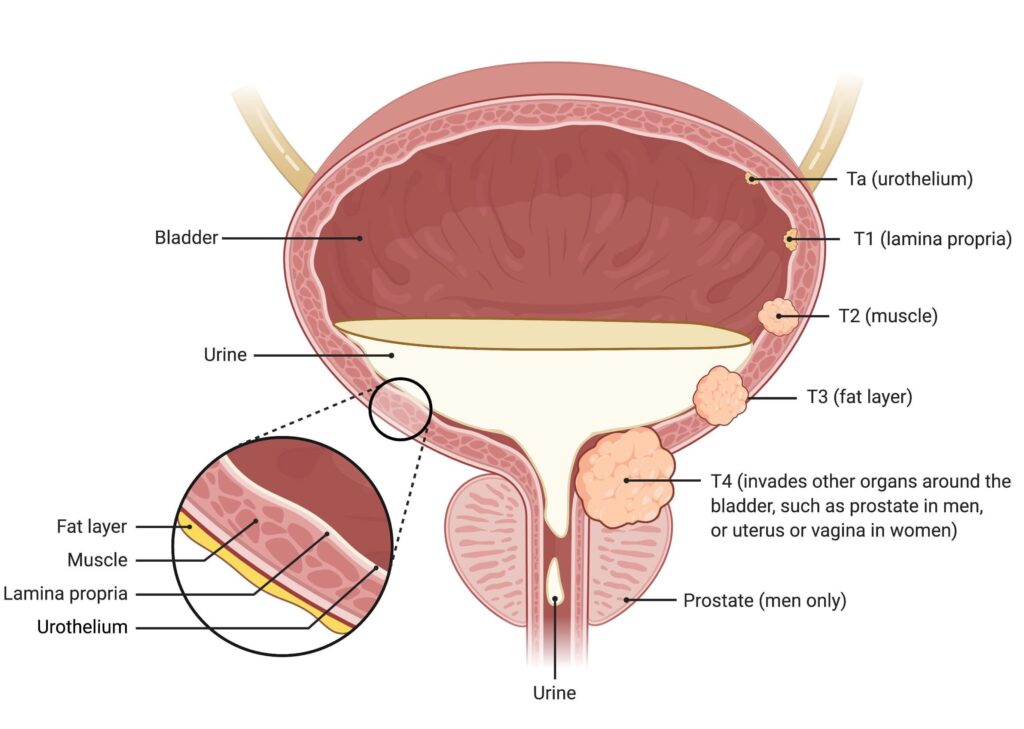
Surgery and Biopsy
During bladder surgery, the tumor, along with some nearby healthy tissue, is removed to check for cancer spread in a biopsy. There are different surgical options, and the best one is chosen based on how advanced or aggressive the tumor is.
Types of Surgeries
1. Transurethral Resection of Bladder Tumor (TURBT):
- This is the most common and basic surgery used mainly for diagnosis and staging. In some cases, it also serves as the complete treatment.
- A cystoscope (a thin tube with a camera) is inserted through the urethra under anesthesia. Using this, the surgeon removes the tumor, which is then tested under a microscope (biopsy).
- If the results are favorable, no further treatment may be needed.
2. Radical Cystectomy with Lymph Node Removal:
- This is a major procedure in which the entire bladder, surrounding tissues, and pelvic lymph nodes are removed.
- In men, the prostate and part of the urethra might also be removed.
- In women, the surgery may include removal of the uterus, fallopian tubes, ovaries, and part of the vagina.
- This surgery carries significant risks and possible complications.
3. Laparoscopic Cystectomy:
- This is a minimally invasive version of bladder removal, using small incisions and telescopic instruments (sometimes robotic-assisted).
- The bladder and surrounding tissues are removed without making a large cut, which typically means quicker recovery and fewer complications compared to open surgery.
- Despite being less invasive, it’s still a major surgery.
After Surgery – What to Expect
✔ Urinary Diversion:
If the bladder is removed (either via open or laparoscopic surgery), the surgeon will create a new way for urine to leave the body.
✔ Using a Urostomy Bag:
- In some cases, a part of the small intestine or colon is used to create a stoma (an opening on the abdomen).
- Urine passes through this opening into a bag worn outside the body.
✔ Internal Urinary Reservoir (Neobladder):
- In selected cases, the surgeon can create a pouch (neobladder) from a section of the intestine and connect it to the urethra, allowing the patient to urinate normally without wearing a bag.
Side Effects of Surgery
Bladder removal is a significant surgery and can affect your lifestyle. It’s important to have a detailed discussion with your doctor and understand the potential side effects:
- Bleeding, infection, and reactions to anesthesia
- Pain or discomfort at the surgical site
- Slow healing
- Urine leakage or trouble emptying the bladder
- Damage to nearby organs
- Erectile dysfunction or loss of sexual sensation
- Nerve damage in the pelvic area
- General weakness