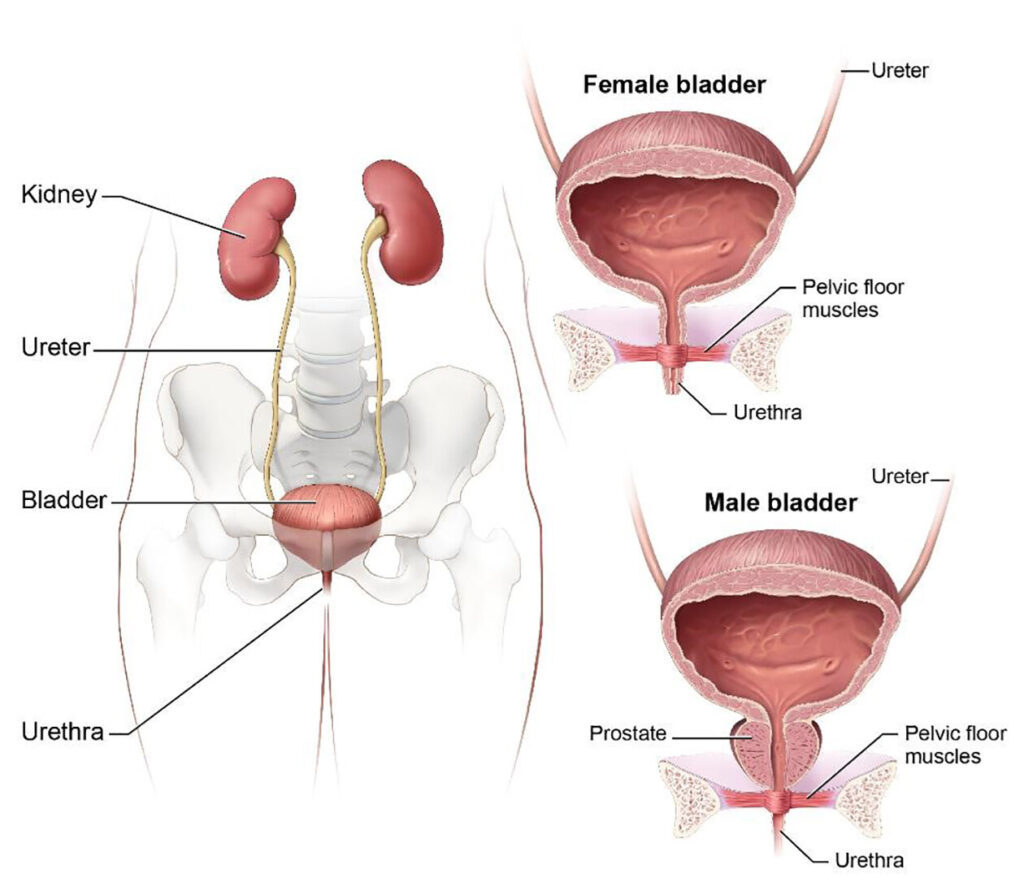
The urethra is the tube within the penis that carries urine out of the body. When there’s a narrowing or blockage in this passage, it results in poor urine flow, a condition known as a urethral stricture.
Urethral Anatomy
The urethra is divided into two main sections:
1. Anterior Urethra
- Penile Urethra: Located along the length of the penis.
- Bulbar Urethra: Found just below and behind the scrotum.
2. Posterior Urethra
- Membranous Urethra: Contains the urinary sphincter, which helps control urination.
- Prostatic Urethra: Passes through the prostate gland.
Causes of Urethral Stricture (Etiology)
1. Anterior Urethral Strictures
Usually occur due to:
- Medical procedures (e.g., instrumentation)
- Long-term use of a Foley catheter
- Lichen sclerosus (a skin condition causing white patches)
- Sexually transmitted infections (STIs)
- Trauma
- Idiopathic (no identifiable cause)
This type of stricture may affect:
- Bulbar Urethra
- Penile Urethra
- Or the entire urethra (pan-urethral)
2. Posterior Urethral Strictures
Typically result from trauma, especially due to:
- Pelvic fractures
- Also referred to as:
- PFUDD (Pelvic Fracture Urethral Distraction Defect)
- PFUI (Pelvic Fracture Urethral Injury)
Symptoms of Urethral Stricture
- Weak or reduced urine stream
- Burning sensation during urination
- Straining to pass urine
- Bleeding at the end of urination
- Feeling of incomplete bladder emptying